
Description
Product Overview
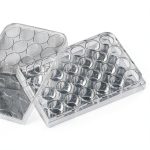
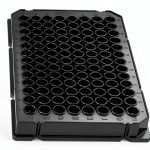
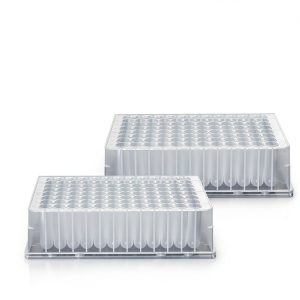
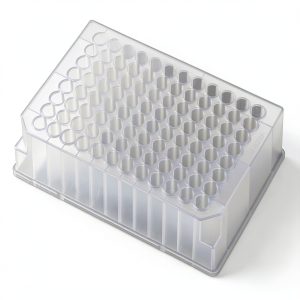
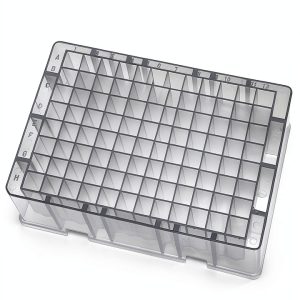
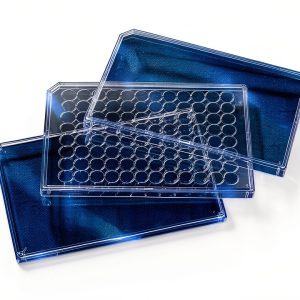
The Globe Scientific PCR-384-ABI 384-well clear plate is engineered for demanding molecular biology applications where precision, speed, and reliability are paramount. Constructed from high‑quality, optically clear polymer, each well offers a crystal‑clear view of samples, reducing the need for additional inspection tools. The ultra‑thin wall design, measuring just 0.2 mm, maximizes thermal conductivity, allowing rapid temperature changes that are essential for efficient polymerase chain reaction (PCR) cycles. This design minimizes thermal lag, delivering consistent amplification across all 384 wells, which is critical for high‑throughput screening and quantitative assays.
Beyond its thermal performance, the plate features an ABI‑style single notch that aligns perfectly with a broad spectrum of thermal cyclers, eliminating compatibility concerns and simplifying workflow integration. The clear, flat bottom of each well ensures uniform optical density readings, supporting downstream applications such as fluorescence detection and melt‑curve analysis. With a pack of 100 plates, laboratories can maintain a steady inventory, reducing downtime caused by re‑ordering and ensuring uninterrupted experimental continuity.
![[Product front view showing all components]](https://www.advora.store/wp-content/uploads/2026/08/f8638c085648458ba2a1791c5c5261e2.jpg)
Usage
Designed for versatility, this 384‑well plate excels in a variety of laboratory settings, from academic research labs to industrial biotech facilities. It is ideal for quantitative PCR (qPCR), high‑resolution melt (HRM) analysis, genotyping, and next‑generation sequencing library preparation. The ultra‑thin wall construction facilitates rapid heat transfer, making it especially suitable for protocols that require fast cycling times, such as fast‑PCR and multiplex assays. Users can confidently employ the plate in both standard and high‑throughput workflows, knowing that each well delivers consistent performance.
In addition to PCR, the plate’s clear wells support visual inspection of reaction mixes, enabling technicians to quickly identify bubbles, precipitates, or uneven sample distribution without opening the plate. This visual clarity also aids in troubleshooting and quality control, reducing the risk of failed experiments. The plate’s robust design withstands repeated centrifugation and thermal cycling, ensuring durability throughout extensive experimental runs.
For laboratories that operate under strict regulatory standards, the plate meets common quality criteria for laboratory consumables, providing traceability and batch consistency. Its compatibility with automated liquid handling systems further streamlines sample preparation, reducing manual pipetting errors and increasing overall laboratory efficiency.
Why Choose Us
Globe Scientific has a long‑standing reputation for delivering high‑quality scientific consumables, and this PCR plate is no exception. Each plate undergoes rigorous quality control testing, including dimensional verification, optical clarity assessment, and thermal performance validation, ensuring that every product meets the exacting standards required for sensitive molecular assays. The company’s commitment to precision manufacturing translates into plates that provide reliable, reproducible results, minimizing variability between runs.
Our plates are manufactured using a proprietary polymer blend that balances optical clarity with mechanical strength. This material choice reduces the risk of well cracking or deformation during intensive thermal cycling, extending the usable life of each plate. Moreover, the ultra‑thin wall design is the result of extensive research and development aimed at optimizing heat transfer while maintaining structural integrity.
Customer support is a cornerstone of Globe Scientific’s service model. Our technical assistance team is available to help users troubleshoot any issues related to plate performance, compatibility, or protocol optimization. We also provide detailed documentation, including recommended handling procedures and best‑practice guidelines, to help laboratories achieve the best possible outcomes with our products.
Key Features
- Ultra‑thin 0.2 mm walls deliver rapid temperature equilibration, reducing cycle times and improving assay efficiency.
- Crystal‑clear wells provide unobstructed visual inspection, facilitating quick detection of bubbles or precipitation.
- ABI‑style single notch ensures seamless compatibility with a wide range of thermal cyclers, eliminating setup errors.
- Durable polymer construction resists cracking and deformation during repeated centrifugation and high‑temperature cycles.
- Dedicated customer support and comprehensive technical documentation help users maximize performance and resolve issues quickly.
FAQ
What thermal cyclers are compatible with this plate?
The plate follows the ABI‑style single notch design, making it compatible with most major thermal cyclers that accept ABI‑style plates, including instruments from Applied Biosystems, Thermo Fisher, and Bio‑Rad. Always verify the specific model’s plate compatibility in the instrument manual.
Can the plate be used for high‑resolution melt (HRM) analysis?
Yes, the clear, flat‑bottom wells provide consistent optical density, which is essential for accurate fluorescence detection in HRM assays. The ultra‑thin walls also promote uniform temperature distribution, improving melt curve precision.
Is the plate suitable for automated liquid handling systems?
Absolutely. The plate’s dimensions and notch design conform to standard SBS specifications, allowing seamless integration with most automated pipetting and dispensing platforms. This compatibility helps reduce manual handling errors and increases throughput.
How should the plates be stored to maintain performance?
Store plates in a cool, dry environment away from direct sunlight. Keep them in their original packaging until use to protect the polymer from dust and moisture, which could affect optical clarity and thermal properties.
What is the recommended maximum number of freeze‑thaw cycles?
While the polymer material is robust, it is best practice to limit freeze‑thaw cycles to no more than three to preserve well integrity and prevent potential micro‑cracks that could compromise assay results.
Reviews
There are no reviews yet.